
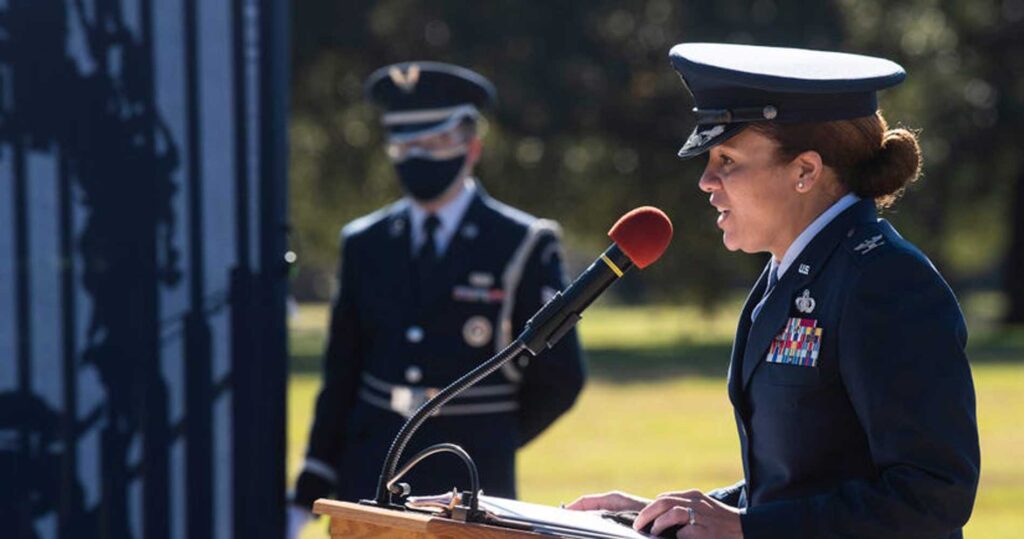
If you know the mission that drives WVIF, then you know one thing for sure: WVIF is committed to empowering Women Veterans. “Connect, Engage, Empower” isn’t just a tagline; it’s our outreach in action. Celebrating your stories, honoring your service, and empowering you as leaders is a critical component of what we do. With that in mind, we’re launching a new initiative, Stories of Strength. Across our digital media, we’ll put the spotlight on you and your stories. These are stories of leadership, accomplishments, triumph over challenge, change-making, post-military successes, trailblazing, and more. We hope that sharing your stories will uplift and empower other women in service and strengthen our vibrant community in the process.
Defining Leadership: Meet Retired Air Force Colonel Eries Mentzer

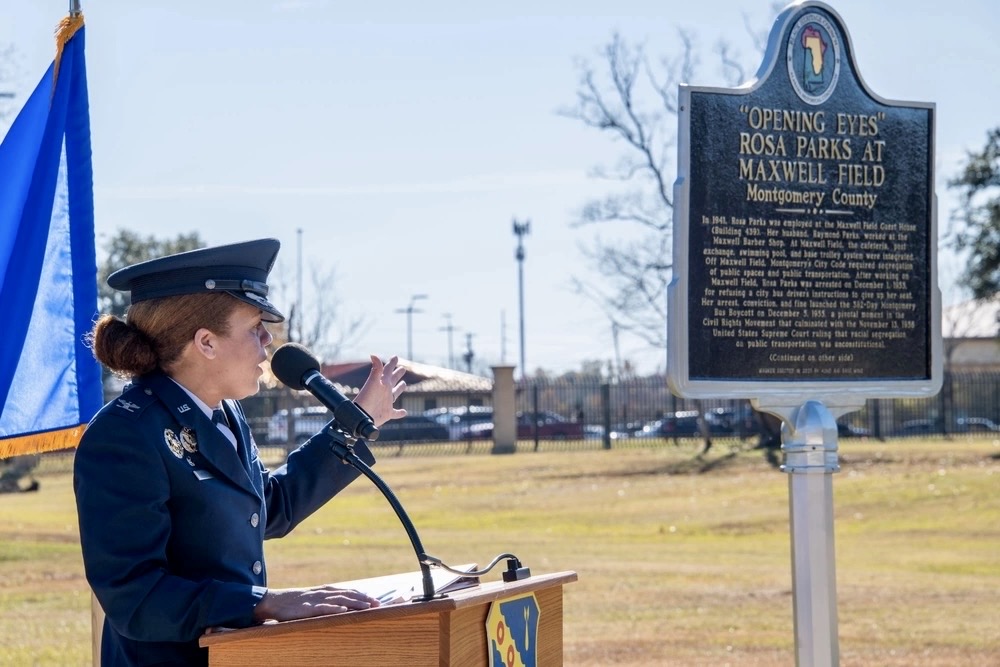
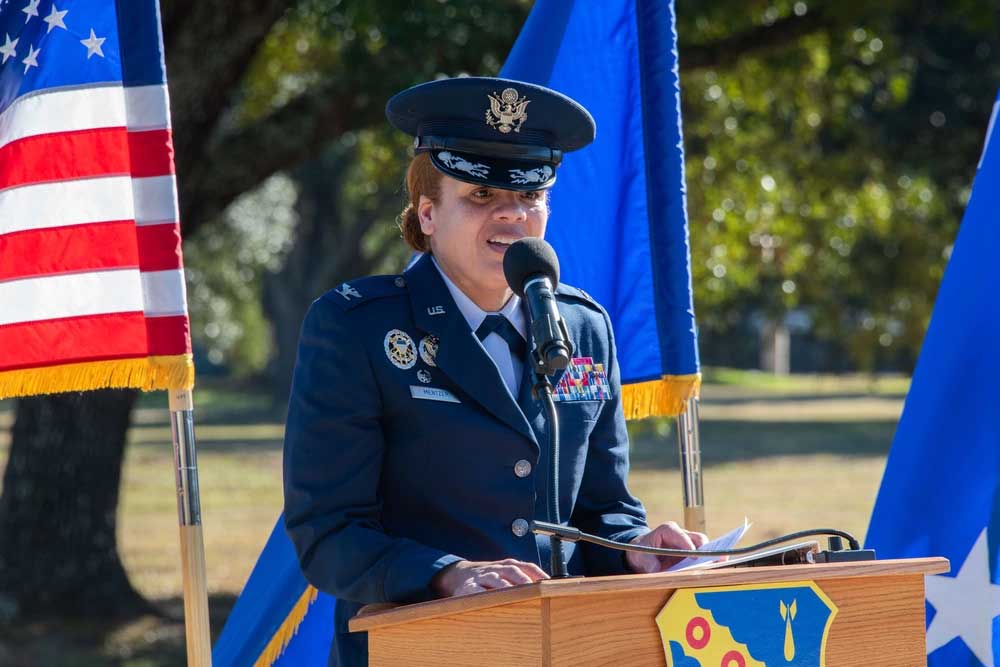
Many of you might remember retired Colonel Eries Mentzer from our annual conference in November. She retired in 2024, after nearly thirty years in uniform.
Throughout her career, Mentzer broke through barriers as the first woman or first Black woman to serve in key roles. Before she retired, she was the first Black woman Commander of the 42nd Air Base Wing at Maxwell Air Force Base, Alabama. But she’ll tell you that, while those were important elements of her experience, they’re not the complete definition.
In fact, when she looks back on her evolution as a leader – right up to the last moment before she officially retired – she doesn’t think about herself much at all; she thinks about those she was privileged to lead, follow, and serve alongside.
Over the years, Mentzer honed her leadership philosophy of of Fight Tonight (readiness), Fight Tomorrow (strategic planning) and Freedom To Serve (removing barriers to service), but if you hear her story while in command at the 42nd ABW, you can see that philosophy in action.
Removing Barriers
When Mentzer arrived at Maxwell in August 2020, one of her main Fight Tomorrow priorities was to implement a 10-year strategic plan. It was a major effort in revitalizing the Air University campus, modernizing infrastructure, and investing in Maxwell’s key programs.
As part of her Freedom To Serve, she led Range 42, a partnership to bring Top Tracer technology to modernize Maxwell’s insolvent golf course while connecting students with families worldwide through Top Golf. Mentzer also led the lease of underutilized Maxwell land to build Montgomery Whitewater, the $75 million premier recreation and training facility just outside the main base gate.
At the same time, Mentzer saw a need to invest in the people of Maxwell and in the wider community. Effects of the pandemic had built high walls between people on base, and between the base and the community.
“That was such a limitation,” she said. She didn’t have the opportunities to network in person with community partners. People on and off base were also hesitant to participate in in-person meetings. And virtual conferences were leaving people fatigued.
“We needed to break down the walls and better connect with the community we support and defend,” she said. “How do we build connections, inspire and uplift through our commonalities?”
A Sense of Duty
Prior to Mentzer’s arrival at Maxwell, she reflected on the huge responsibility in front of her.
“I was looking for something to ground myself and connect me to Montgomery,” she said.
Mentzer recalled a book recommended by her mother, who was from Montgomery. The book, Rosa Parks: My Story, by Rosa Parks and Jim Haskins, had been a source of inspiration for her mother. Maybe, Mentzer thought, gaining a deeper understanding Rosa Parks’ courageous leadership through complex challenges would be the source of grounding she needed.
While Mentzer knew Rosa Parks’ story, she hadn’t realized that a significant part of that story took place right at Maxwell.
Parks worked as a secretary and a seamstress at Maxwell during World War II. At the time, public transportation in Montgomery was still segregated, but transportation on base was not. That meant that when Parks transferred to a bus on base, she experienced first-hand the difference of an unsegregated bus. This sparked the journey that led Parks to take her historic stand against segregated transportation.
Mentzer found a connection between Parks’ activism and her own sense of duty. She felt moved by the notion that anyone can stand up and be a leader. Any person, no matter rank, position, or power can make an impact.
And often, it’s the strength that’s forged in community, team, and collaboration, that makes the biggest difference. This notion inspired an initiative to develop a way that service members and the wider community could come together around a common goal.
A Community Effort
While Maxwell and Montgomery were intricately connected through the story of Rosa Parks, there was no historical marker that recognized her on base. With the 65th anniversary of the Montgomery Bus Boycott just 4 months away, Mentzer saw an opportunity to inspire and uplift service members while also building a bridge to the wider Montgomery community.
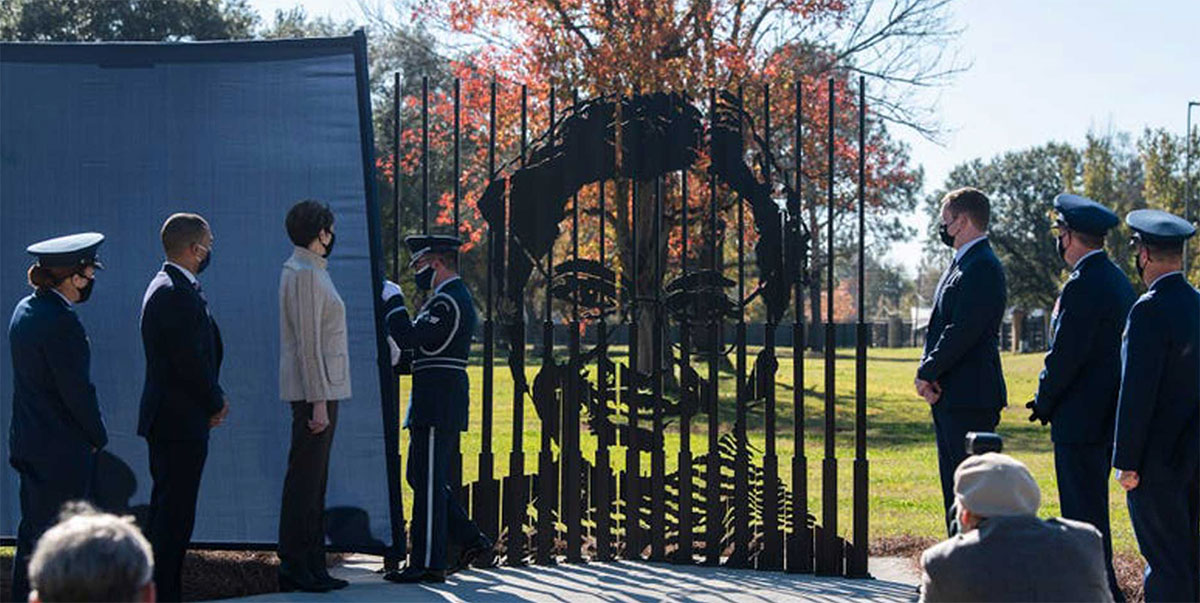
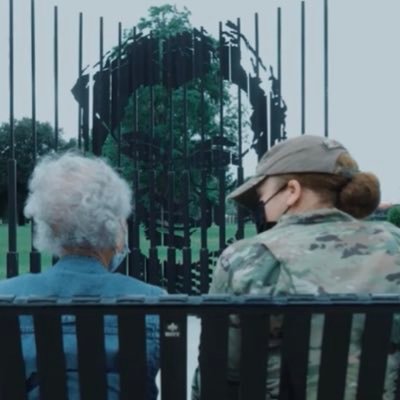
The idea led her to form a team of airmen and community members to design, fabricate, and install a Memorial to Rosa Parks on Maxwell Air Force Base. Ian Mangum, a 42nd Force Support Squadron team member, who was originally from Montgomery, designed the memorial. The team who oversaw the project, from design to installation, was largely made up of active duty, civilian, and civic leader women. And, the memorial itself was fabricated using materials and teams from units on Maxwell.
“That was a great way to unite as mission partners,” she said. “When you empower your team, you unleash their creativity, you give them the courage and confidence to fully share their talents.”
A Lasting Impact
When the Rosa Parks Memorial was unveiled, the response was overwhelmingly positive.
Former Secretary of the Air Force Barbara Barrett participated in the unveiling, local Montgomery leaders, including Montgomery Mayor Steven Reed and Equal Justice Initiative founder Bryan Stevenson, participated, and leaders from several foreign embassies sent congratulatory letters.
When asked how she looks back on the project as a whole, Mentzer reflects that the memorial is a lasting tribute to Parks’ courage, and it also represents what can be accomplished when people are empowered to work together and rise to their highest potential.
Empowering Future Generations
Mentzer recognizes the impact that Rosa Parks had not only on the nation as a whole, but on her own life and career.
“She had the courage, confidence, and character to persist toward our nation’s founding ideals,” Mentzer said. “And because she did that, I and so many others today have more Freedom to Serve.”
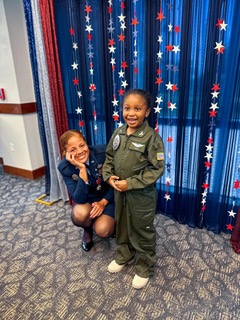
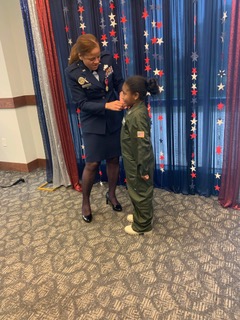
This single but powerful concept is perhaps the thread that tied together Mentzer’s entire career. When she retired, she took the opportunity to recognize the ways other women opened doors and empowered her to rise along the way. Singling out a woman from each one of her assignments, Mentzer honored the impact each one had on her life, ending with a Kindergarten girl, who aspires to fly in the Air Force one day.
Stepping out of the uniform and into retirement, Mentzer says she is grateful for the opportunity to serve her nation. She now encourages young women and men to stand up for our nation through military or civilian service.
Asked to sum up her experiences, she points not to her own achievements but to the impact of the people with whom she was honored to serve, saying, “People will rise to their highest potential if you have clear command intent and communication, instill trust, and give them the freedom to serve in the Armed Forces.”